Determination of Water Content in Plastics according to ISO 15512
In plastics engineering, the determination of water content refers to analytical procedures used to measure how much water is present in a plastic material at the time of testing. The main international standard for this determination is ISO 15512:2019, which applies to plastics in the form of powders, granules, and finished articles. The standard is current according to the official ISO catalogue, which states that the 2019 edition was reviewed and confirmed in 2024. [1][3]
The scope is narrower than it may first appear. ISO 15512 is not about the long-term uptake of water by polymers under humid conditions or immersion. Instead, it refers to the water content already present in the sample when it is analyzed. The standard itself makes this distinction explicit by stating that its methods do not test water absorption kinetics and equilibrium as measured by ISO 62. This distinction is important because water content and water absorption can be used to answer different industrial questions. [1][3][4]
In practice, the determination of water content matters because residual moisture can affect processing stability, part quality, and polymer degradation. Feedstock moisture can lead to foaming, demolding problems, viscosity fluctuations, bubbles, streaks, voids, and weld-line defects, and inadequate pre-drying can cause trouble for later steps such as coating or plating. Several engineering thermoplastics, including polycarbonate, polyamides, polyarylates, and polyesters, generally require drying before melt processing. [5]
Determination of water content in plastics
According to ISO 15512, water content is expressed as a percentage mass fraction of water. The concept is operational rather than abstract: a method determines the amount of water released, extracted, titrated, or otherwise detected under the specified analytical conditions. This differs from broader moisture behavior in polymers, which can include diffusion, sorption, swelling, and long-term ageing. The NPL guide on moisture in polymeric materials situates these broader phenomena within absorption and diffusion testing rather than direct water-content determination. [1][4]
This distinction also explains why ISO 15512 and ISO 62 are complementary rather than competing standards. ISO 15512 helps answer a process-control question such as “How much water is in this resin lot or finished article now?” ISO 62, by contrast, addresses how plastics absorb water over time under controlled exposure conditions and, in certain cases, how moisture diffusion may be characterized. [1][3][4]
Water content in polymers and plastics
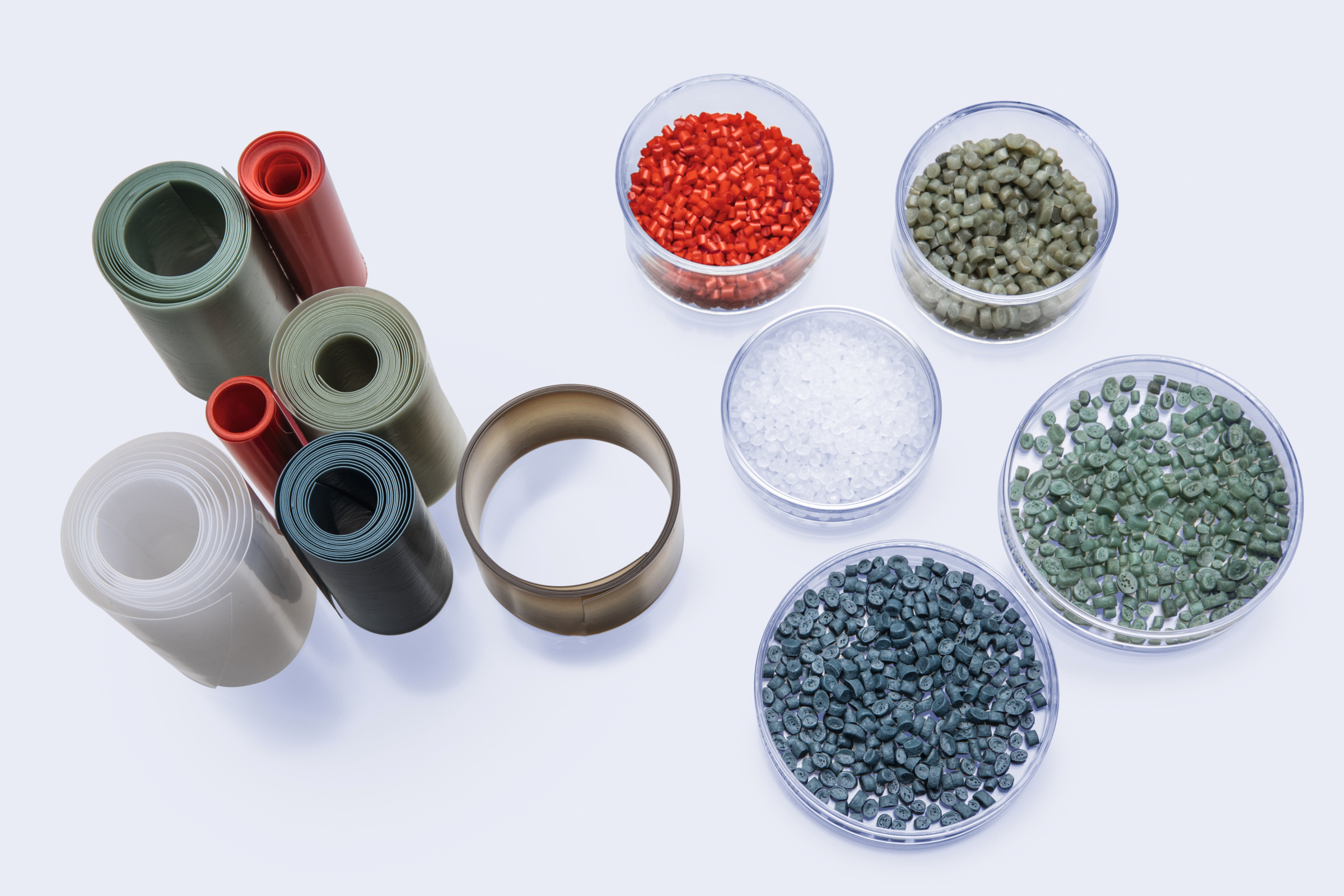
Water-content determination is especially important in hygroscopic or hydrolysis-sensitive polymers. The plastics handbook Die Kunststoffe und ihre Eigenschaften groups thermoplastics according to whether drying is usually unnecessary, moisture primarily causes absorption effects, or moisture at processing temperatures can lead to hydrolytic degradation. For the latter group, the handbook includes polycarbonate and several polyesters, while polyamide appears as a case where both absorption and processing sensitivity are important. [5]
The same handbook offers a PET-specific example. In its PET raw-material section, it states that PET granules should be dried to prevent hydrolytic degradation and notes that Karl Fischer determination is particularly suitable for moisture measurement, while also mentioning industrial process-oriented methods. This is a reminder that water content determination is not just an abstract laboratory exercise, but a step directly linked to melt stability, intrinsic viscosity retention, and final product performance. [5]
ISO 15512:2019 and its scope
The path to ISO 15512:2019 was prepared by ISO/TC 61, Plastics, SC 5, Physical-chemical properties. The uploaded English standard states that the fifth edition replaced ISO 15512:2016 and that the main technical change was the addition of two alternative methods, Methods D and E.
The scope covers plastics in the form of powder, granules, and finished articles. It states detection limits of 0.1 % for Method A, 0.01 % for Methods B and C, 0.01 % for Method D, and 0.001 % for Method E. The standard also notes that these figures are detection limits that depend on the maximum possible sample mass. In other words, they are not universal guarantees independent of sample size or matrix. [1]
A further point is that not every method is equally suitable for every matrix. The standard says that Method D is suitable for several listed materials, including PA, PC, PP, PE, epoxy resin, PET, polyester, PTFE, PVC, PLA, and PAI, but is not recommended in particular for samples that can release ammonia. By contrast, Methods A, B and E are described as generally suitable for all types of plastic and moisture levels. [1]
Methods defined in ISO 15512
ISO 15512 specifies five alternative methods for the determination of water content in plastics. The analytical principles differ substantially, which is one reason why the standard is useful across different matrices and moisture ranges. [1]
Method A is an extraction method using anhydrous methanol, followed by Karl Fischer titration of the extracted water. It is applicable to all plastics and to granules smaller than 4 mm × 4 mm × 3 mm, and may also be used for certain methanol-insoluble prepolymer powders. Its normative analytical basis is linked to ISO 760, the general Karl Fischer method. [1][2]
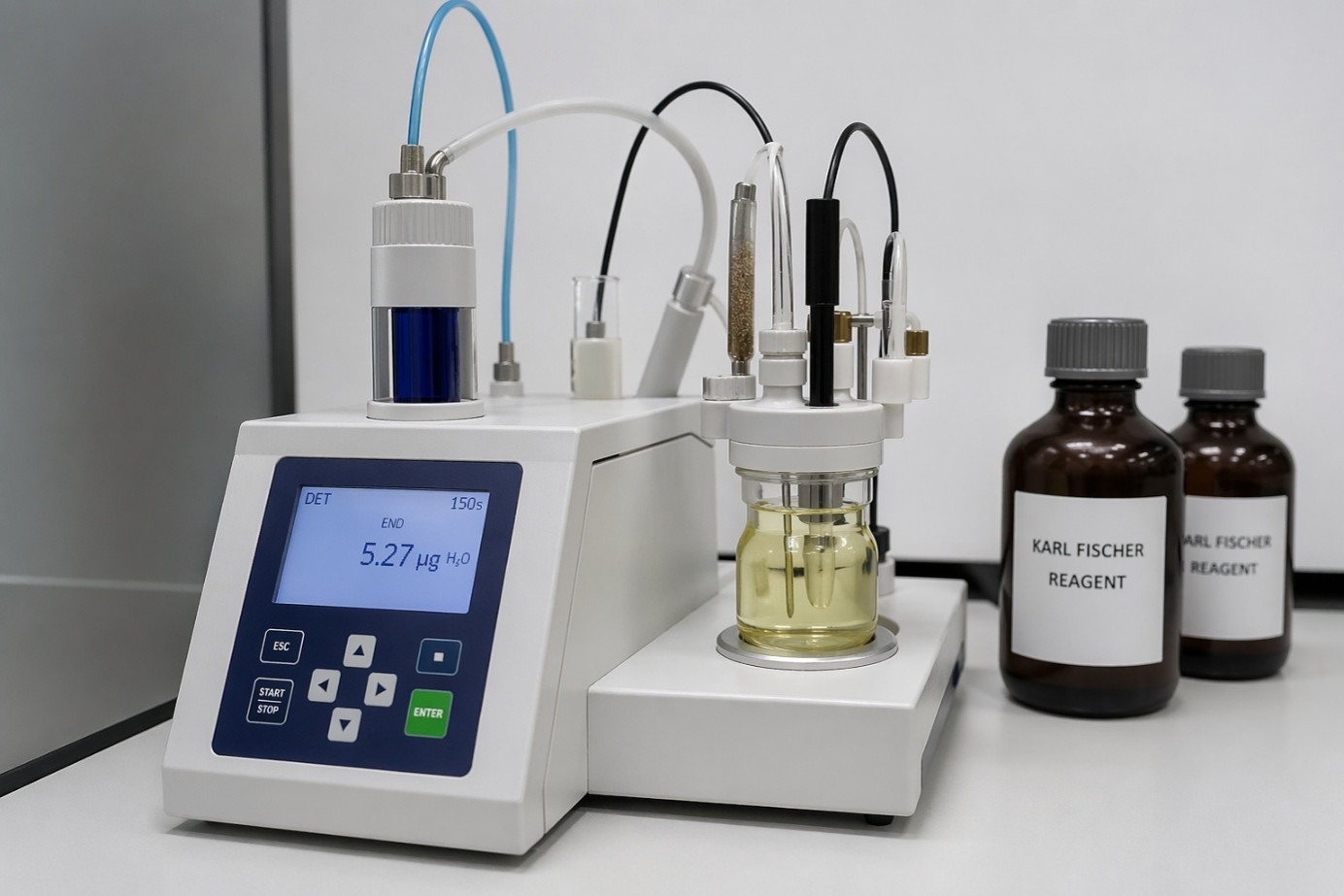
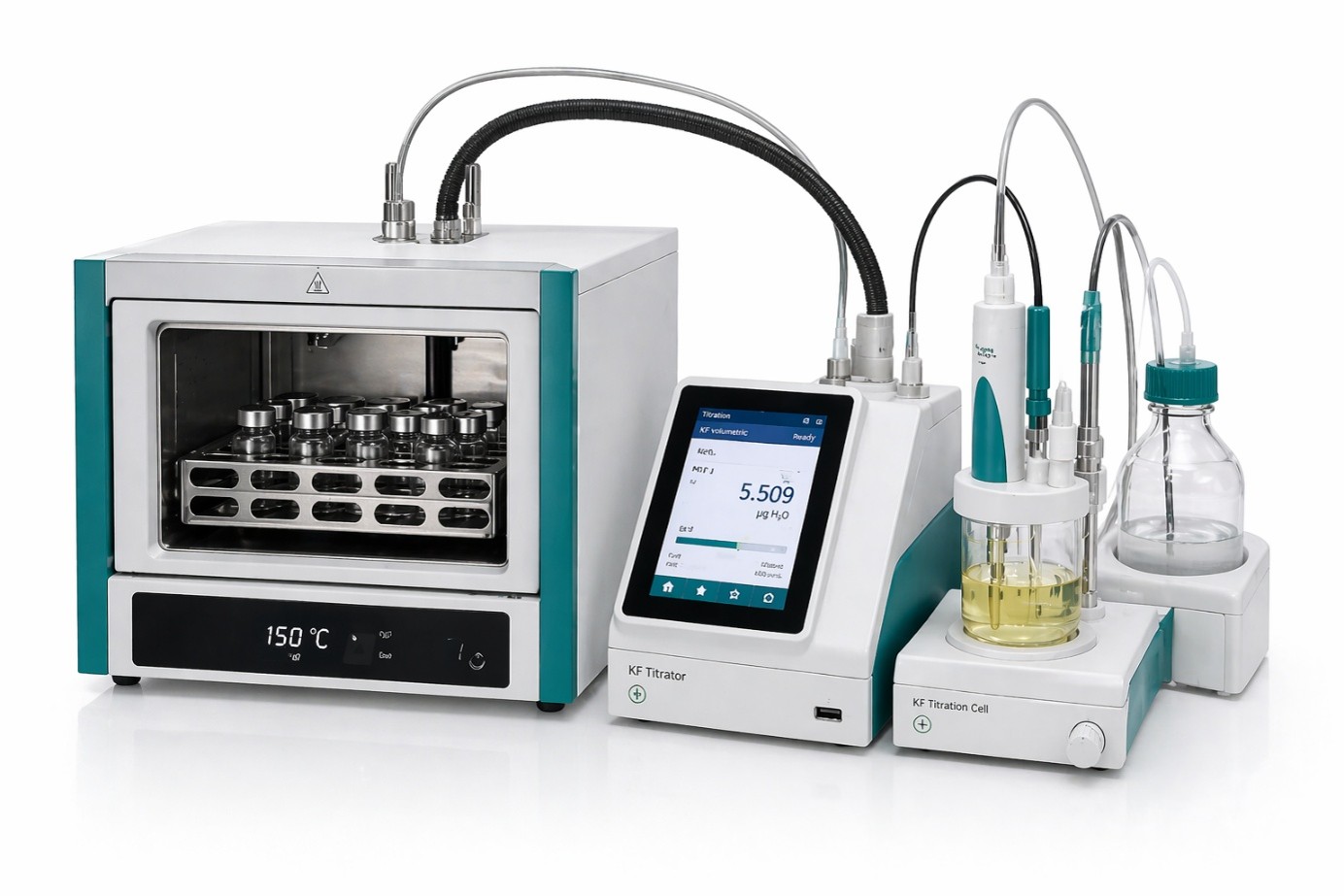
Method B1 and Method B2 are both vaporization methods. In B1, the sample is heated in a tube oven and the released water is carried by dry air or nitrogen to a titration cell, where it is determined either by Karl Fischer titration or coulometric moisture detection. In B2, the same basic logic is used, but the vaporization takes place in a heated sample vial instead of a tube oven. [1]
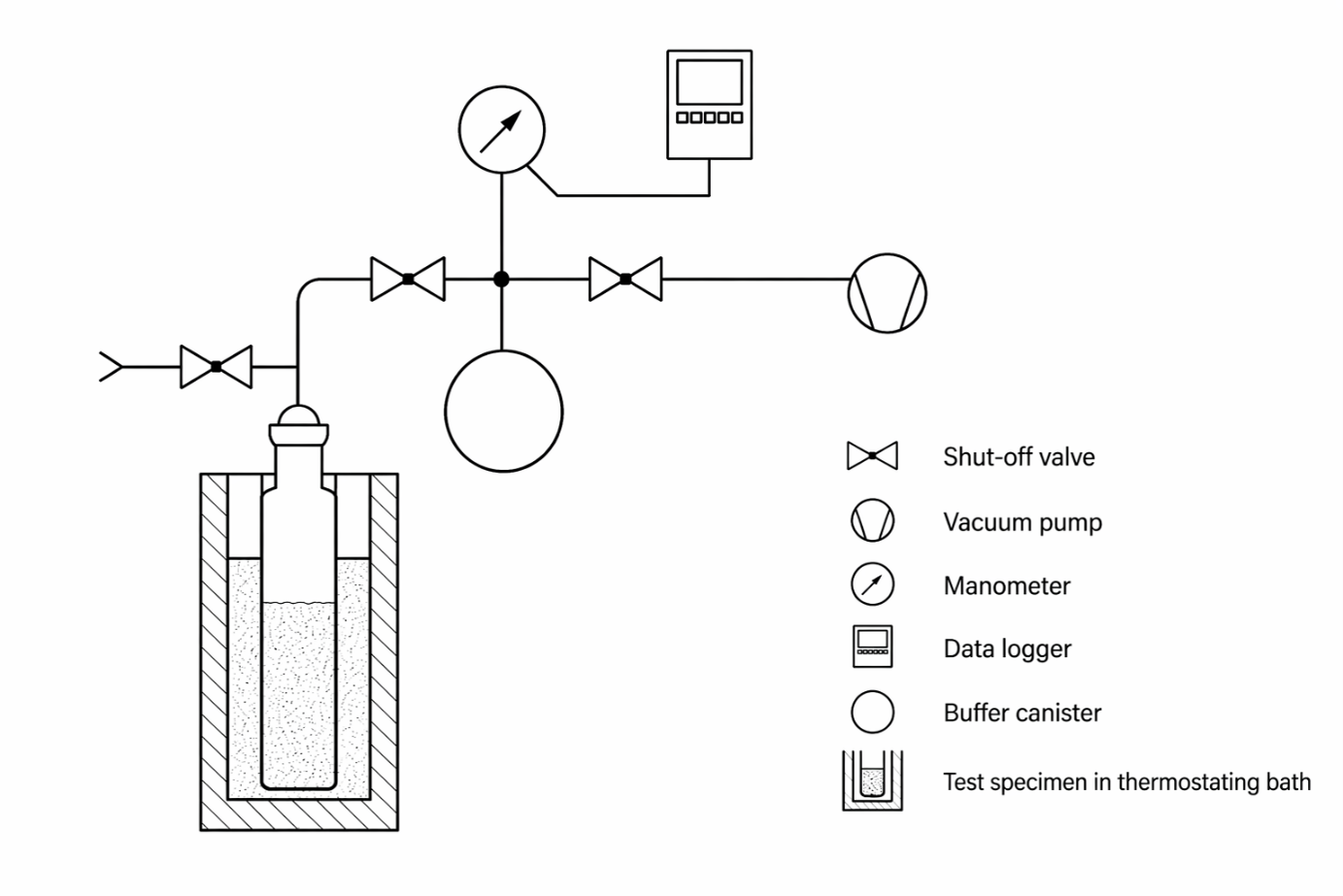
Method C is a manometric vacuum method. The sample is heated under vacuum, and the water content is derived from the resulting pressure increase. The standard states that this method is not suitable for plastic samples that contain other volatile compounds in amounts large enough to contribute significantly to the vapor pressure at room temperature. It therefore requires periodic checking for such volatiles, especially in new types or grades of material. [1]
Method D is a thermocoulometric method using a diphosphorus pentoxide cell. Water is vaporized from the sample, carried by dry air or nitrogen to the sensor cell, and then determined coulometrically. The method has the same general limitation regarding interfering volatile compounds and is described as especially unsuitable where ammonia or amines may react with the acidic P2O5 sensor coating. [1]
Method E is a calcium hydride-based method. Water is released by a combination of heating and vacuum, and reacts with calcium hydride to form hydrogen and calcium hydroxide; the resulting pressure increase is used analytically. The standard states that volatile components that do not react with calcium hydride condense in a cooling trap and therefore do not affect the measurement. [1] (ISO)
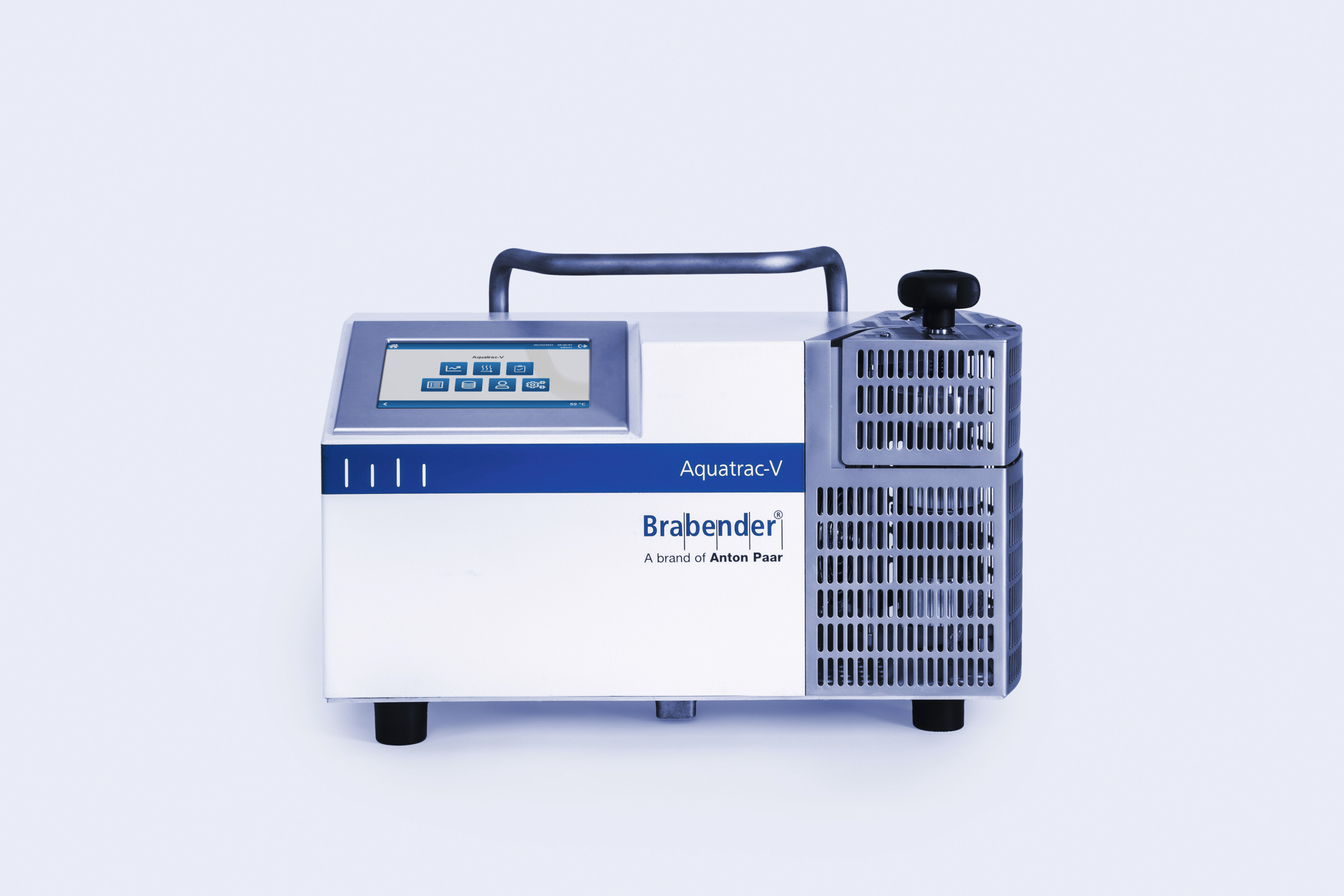
Sample handling, temperature selection, and comparability
One of the most important practical points in ISO 15512 lies not in the individual methods but in the introduction. The standard states that interlaboratory comparability in plastics water-content determination is often poor, and identifies sample packaging, sample handling, and differences in equipment and settings as major causes. It recommends water-barrier sealed bags or special glass containers and handling in dry nitrogen or dry air where possible. [1]
This emphasis is consistent with broader moisture-metrology guidance. The NPL moisture guide stresses that good moisture data in polymeric materials require representative conditions and careful attention to factors that influence absorption and measurement quality. In that respect, the insistence in ISO 15512 on careful packaging and strict procedure is not an incidental detail but part of the method’s metrological logic. [4]
Temperature selection is another central issue. ISO 15512 does not prescribe a universal temperature for the vaporization methods. The standard notes that 200 °C is often used in the manometric method but may be too high for some condensation materials because water can be generated by condensation or degradation reactions. If the temperature is too low, not all water evaporates; if it is too high, the method may create additional water rather than simply measure it. Annex B is therefore devoted to selecting an optimum heating temperature and heating time. [1]
Strengths and limits of the standard
A major strength of ISO 15512 is that it does not force all plastics into a single analytical principle. Instead, it offers extraction, vaporization, manometric, thermocoulometric, and calcium hydride-based approaches within one standardized framework. That flexibility is useful because plastics differ widely in form, moisture level, volatility of additives, and thermal behavior. [1]
Its limits are also clear. The standard is a water-content standard, not a full standard for long-term moisture behavior. Some methods are sensitive to volatile interferences, some require careful temperature optimization, and some precision data remain incomplete. [1]
For that reason, the determination of water content in plastics should be understood as one part of a broader moisture-control system. ISO 15512 addresses the direct analytical determination of water already present in powders, granules, or finished articles. When the question shifts to water absorption over time, diffusion through thickness, or equilibrium uptake under humid exposure, ISO 62 and related guidance become the more relevant framework. [1][3][4]
References
[1] International Organization for Standardization. ISO 15512:2019 — Plastics — Determination of water content. Official catalogue entry and current-status page. (ISO)
[2] International Organization for Standardization. ISO 760:1978 — Determination of water — Karl Fischer method (General method). (ISO)
[3] International Organization for Standardization. ISO 62:2008 — Plastics — Determination of water absorption. (ISO)
[4] Duncan, B. C.; Broughton, W. R., Absorption and diffusion of moisture in polymeric materials, National Physical Laboratory, Good Practice Guide No. 102.
[5] Eyerer, P.; Elsner, P.; Hirth, T., eds., Die Kunststoffe und ihre Eigenschaften, 6th ed., Springer, 2005.
FAQs with short answers
What is the determination of water content in plastics?
It is the analytical measurement of the water already present in a plastic sample, usually reported as a percentage mass fraction of water, and under ISO 15512 it applies to powders, granules, and finished articles. [1]
How is ISO 15512 different from ISO 62?
ISO 15512 determines water content at the time of analysis, while ISO 62 addresses water absorption behavior, including uptake under controlled exposure and, in suitable cases, diffusion-related properties. [1][3][4]
Which ISO 15512 method reaches the lowest published detection limit?
According to the standard, Method E, the calcium hydride method, is suitable down to 0.001 % water content, with the stated limit depending on the maximum possible sample mass. [1]